

Sagestry’s SPF 50 mineral sun stick is best for travelers who want a pocket-size, grass-fed tallow formula. For covering larger areas, choose a mineral lotion; for a child aged 6 months or older, consider an age-labeled baby sunscreen. This 2026 guide compares those uses without treating every format as interchangeable.
- Sagestry is the best mineral sunscreen stick for travel if your priority is a pocket-size, grass-fed tallow formula.
- Zinc oxide provides mineral sun protection. Grass-fed tallow forms the moisturizing base; it does not supply SPF.
- Choose lotion for larger exposed areas and an age-labeled baby sunscreen for children aged six months or older.
- Check broad-spectrum and water-resistance labeling before choosing sunscreen for swimming or long outdoor days.
Why this matters
A sunscreen stick solves a packing problem. It keeps a solid formula close at hand, without a bottle to pour from. That makes it useful for a walk through town, a stop beside the road, or time outside between flights.
But the smallest package is not always the right format for every exposed area. Your face, arms, legs, and a child’s skin create different application tasks. Choose the format around the skin you need to cover, not just the space in your bag.
The comparison below includes one mineral stick and two alternatives. The lotion and baby sunscreen are not competing sticks. They show when a different format makes more sense than buying a stick for every purpose.
What makes the best mineral sunscreen stick for travel?
Use these criteria for your 2026 shortlist. Read the sunscreen label before the ingredient story.
- Labeled protection: Look for broad-spectrum protection and SPF 30 or higher. An SPF number alone does not describe UVA protection.
- Formula base: Grass-fed tallow is the base in the featured stick. It helps soften skin; zinc oxide is the sunscreen ingredient.
- Application area: A stick suits targeted application. Lotion gives you a spreadable format for larger areas.
- Water exposure: Choose a water-resistant sunscreen for swimming or sweating. Read the stated duration and reapplication directions.
- Age directions: A baby sunscreen needs clear age instructions. Do not assume every mineral formula carries the same directions.
- Daily handling: Consider how you will apply, close, carry, and reapply the product during your trip.
Texture matters, too. A formula you dislike applying is an awkward travel companion. Mineral sunscreen can leave a visible cast, and the finished appearance depends on the formula, application, and your skin tone. Do not read “non-nano” as a promise of an invisible finish.
Travel sunscreen options at a glance
These 2026 picks have separate jobs. Start with your main use, then check the limitations.
| Option | Best for | Standout feature | Key limitation |
|---|---|---|---|
| Sagestry mineral sun stick | Pocket-size, targeted application | Grass-fed tallow base with non-nano zinc and SPF 50 | A stick needs careful application to avoid missed areas |
| Mineral sunscreen with zinc oxide SPF 50 | Larger exposed areas | Water-resistant mineral lotion in a 3.4 fl oz container | Liquid packing rules apply when flying |
| Baby sunscreen sensitive skin protection SPF 50 | Children aged 6 months and older | Mineral-only formula with baby-specific positioning | Not an automatic choice for babies younger than the labeled age |
1. Mineral sun stick: best for pocket-size travel carry
The Sagestry mineral sunscreen stick combines grass-fed tallow with non-nano zinc oxide and a labeled SPF 50. The solid format is described as pocket-size. It suits travelers who want sunscreen close at hand without carrying another lotion bottle.
It starts with tallow. In this formula, the rendered fat serves as the skin-softening base. Zinc oxide provides the mineral sun protection; the tallow itself is not a substitute for a tested sunscreen.
Best for: Travelers who prefer a grass-fed tallow base and want a solid format for targeted application.
Mineral sun stick pros:
- Pocket-size format fits a small travel kit.
- Solid application avoids pouring lotion into your hand.
- Grass-fed tallow gives the formula a clear ingredient distinction.
- Non-nano zinc oxide is paired with labeled SPF 50 protection.
Mineral sun stick cons:
- Covering broad areas takes repeated passes rather than one squeeze of lotion.
- A quick swipe does not establish that you have applied enough sunscreen.
- Grass-fed tallow is animal-derived, so this is not a vegan choice.
Use a deliberate pattern. Cover the whole exposed area, follow the package directions, and check around edges such as the hairline and ears. A convenient format still needs careful application.
Verdict: Buy for pocket-size carry and a tallow-based formula. Choose lotion when broad coverage is your main task.
2. Mineral sunscreen lotion: best for larger exposed areas
The mineral sunscreen lotion pairs grass-fed tallow with zinc oxide and SPF 50. Its title identifies a water-resistant formula in a 3.4 fl oz container. It is the more practical format to consider when your travel clothes leave your arms and legs exposed.
Lotion lets you dispense sunscreen and spread it across a broad area. That does not remove the need to apply enough. Follow the label rather than using a thin layer simply to make the bottle last.
Best for: Travelers who want a spreadable sunscreen for larger exposed areas, including trips involving water.
Mineral sunscreen lotion pros:
- Spreadable format supports broad-area application.
- The product is labeled SPF 50.
- Water resistance is explicitly identified in the product title.
- Grass-fed tallow provides the formula’s moisturizing base.
Mineral sunscreen lotion cons:
- The bottle is subject to applicable liquid screening rules.
- Application generally involves spreading the formula with your hands.
- Water resistance does not remove the need to reapply after swimming or towel drying.
For a swim day, read the water-resistance duration on the package. Match your reapplication routine to that instruction. A high SPF number does not tell you how long water resistance lasts.
Verdict: Buy for broad-area coverage. Keep the stick as a separate convenience, not a reason to underapply lotion.
3. Baby mineral sunscreen: best for age-labeled family packing
The baby sunscreen is described as a mineral-only SPF 50 formula for babies aged 6 months and older. Its main distinction here is its stated age use. That makes it a relevant family-packing option, rather than another adult sunscreen chosen only because it says “mineral.”
Read the full directions before applying it. A baby-specific name does not replace the label, and it does not guarantee that every child will tolerate every ingredient.
Best for: Parents packing a sunscreen labeled for children aged 6 months and older.
Baby mineral sunscreen pros:
- The stated age range gives parents a clear starting point.
- The formula is described as mineral-only.
- SPF 50 protection is explicitly identified.
Baby mineral sunscreen cons:
- The stated age range does not include younger infants.
- Sensitive-skin positioning is not a guarantee against irritation.
- Sunscreen still needs to sit alongside shade and protective clothing.
For babies younger than 6 months, prioritize shade and protective clothing and ask your pediatrician about sunscreen use. Do not simply transfer the directions from an older child’s product.
Verdict: Buy for the stated age group when the full label fits your child’s needs. Skip assumptions based on the word “baby.”
What the ingredients actually do
Ingredient lists become easier to compare when you separate the base from the sunscreen ingredient. They have different jobs. Neither needs a long story to explain it.
Grass-fed tallow
Tallow is rendered animal fat. In the featured stick and lotion, grass-fed tallow is the formula’s base and helps soften the skin. It also means those formulas are not vegan.
Traditional use explains why shoppers recognize tallow. It does not prove that a finished sunscreen protects better than another tested sunscreen. Use the labeled protection claims to judge sun protection.
Zinc oxide
Zinc oxide is a mineral sunscreen ingredient. It helps protect skin from ultraviolet radiation through absorption and scattering. The finished product’s labeled SPF comes from testing the formula, not from the presence of zinc oxide alone.
“Non-nano” describes particle size. It does not tell you the water-resistance duration, how the sunscreen will look on your skin, or whether you have applied enough.
The rest of the formula
Read the complete ingredient list before buying. Check it for ingredients you already know your skin does not tolerate. A short description on the front of a package cannot do that work for you.
Choose the ingredient base for preference. Choose sunscreen protection from the finished product’s label.
How to choose for your trip
Start with the day you are packing for. A city walk and a swimming trip do not ask the same things of sunscreen.
Check the label
Confirm SPF, broad-spectrum protection, age directions, and any water-resistance claim. Keep those checks separate. One does not stand in for another.
Match the format
Choose the stick for pocket-size, targeted application. Choose lotion when you need to cover larger areas. For a child, begin with the stated age directions before deciding which format you prefer.
Plan reapplication
Keep sunscreen accessible during the day. Follow its directions, and reapply at least every 2 hours outdoors, as well as after swimming or sweating as directed. Towel drying is another reason to check the label and reapply.
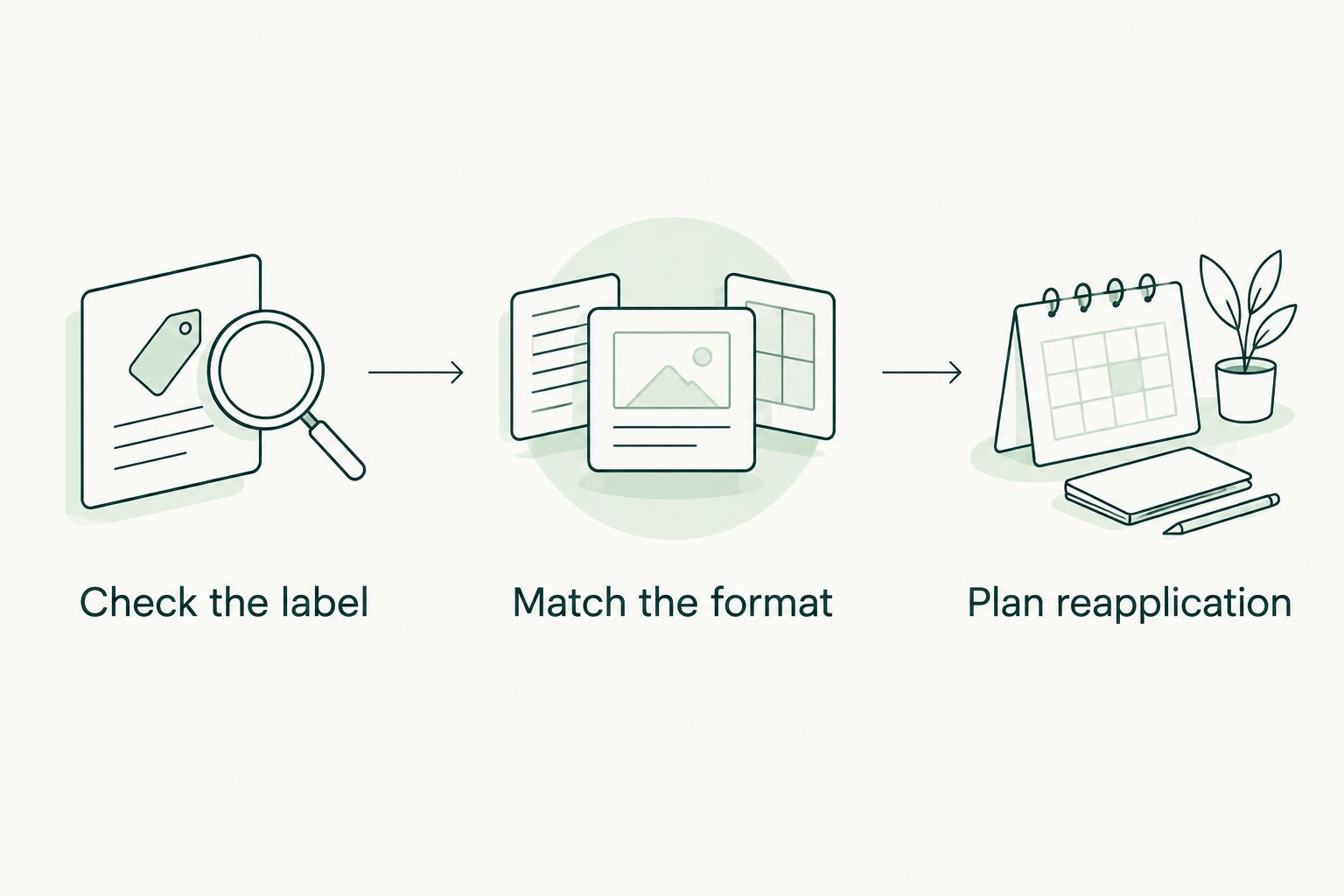
For a 2026 travel kit, the stick and lotion answer different needs. Compare them as separate formats rather than assuming one must replace the other.


Flying with mineral sunscreen
For U.S. airport screening, TSA treats solid sunscreen sticks differently from liquids. Liquid sunscreen in a carry-on generally follows the 3.4 oz, or 100 mL, container limit and belongs in your permitted liquids bag. Check current TSA guidance and the rules for your other departure airports before packing.
The featured lotion is labeled 3.4 fl oz. That container size does not exempt it from the rest of the liquid-packing requirements. The stick offers a different format, not a reason to ignore destination rules.
Keep the package directions readable. If you move sunscreen into another container, you separate it from instructions you need during the trip. Follow storage directions, too; do not assume a travel product belongs in a hot parked car.
How these 2026 picks were ranked
The order follows the travel task: pocket-size carry first, larger-area coverage second, and age-labeled family use third. The comparison uses stated format, ingredients, SPF, water-resistance wording, and age directions.
This is a use-case ranking, not a claim that one formula has beaten the others in a wear test. Finish, feel, and ease of application remain personal buying considerations.
Which travel sunscreen should you choose?
Choose the Sagestry mineral sunscreen stick if your priority is a pocket-size, grass-fed tallow formula. Choose the lotion when your main task is covering more exposed skin. Choose the baby sunscreen according to its age directions.
For 2026 travel, the decision is simple: protection comes first, format comes second. Do not let a smaller package persuade you to use less sunscreen than the label directs.
FAQ
What's the best mineral sunscreen stick for travel if I want tallow?
The Sagestry mineral sunscreen stick is a suitable choice for travelers seeking a pocket-size, grass-fed tallow formula with non-nano zinc and SPF 50. Check the full label for protection claims, use directions, and storage instructions before your trip.
Is a sunscreen stick better than lotion for travel?
A stick is better suited to compact carry and targeted application; lotion is better suited to spreading over larger exposed areas. Choose around the skin you need to cover, not just the size of your bag.
Can I bring a mineral sunscreen stick in my carry-on?
Solid sunscreen sticks are generally permitted in U.S. carry-on bags without being treated as liquids. Check current TSA guidance and the rules at other departure airports on your itinerary.
Does grass-fed tallow provide SPF protection?
Grass-fed tallow is not a substitute for a tested sunscreen. In the featured tallow sunscreen formulas, zinc oxide is the mineral sunscreen ingredient and tallow serves as the moisturizing base.
Can I use any mineral sunscreen stick for swimming?
Choose a sunscreen with an explicit water-resistance claim for swimming. Read the stated duration and follow reapplication directions, including after towel drying.
How often should I reapply sunscreen while traveling?
Reapply sunscreen at least every 2 hours outdoors and after swimming or sweating as directed on the label. A higher SPF does not remove the need to reapply.
Can I use baby mineral sunscreen on a newborn?
The featured baby sunscreen is labeled for babies aged 6 months and older, not newborns. For younger infants, prioritize shade and protective clothing and ask your pediatrician about sunscreen use.
One last thing
Your ears are easy to forget. So are the tops of your feet when you change into sandals. Before leaving for the day, check the skin your clothes no longer cover.
A small stick earns its place by being easy to carry. Its real value depends on taking it out of the bag and applying it properly.


