

Instead of deciding when to use a hair spray each morning, build your rosemary and rice water for hair routine around wash day, then add a between-wash step only if the label allows it. This 2026 workflow keeps cleansing, conditioning, and scalp comfort ahead of adding more product.
- Sagestry Fermented Rice Water & Rosemary Hair Spray names fermented rice water, rosemary, and keratin; follow its label for application.
- Build a rosemary and rice water for hair routine around washing and conditioning, not promised hair growth.
- Introduce one new product at a time so you can identify unwanted changes.
- Add between-wash use only when the label permits it and your hair needs it.
Why this matters
A routine becomes hard to judge when every wash brings a different treatment. If your hair feels coated or your scalp becomes uncomfortable, you need to know what changed. Keep your familiar wash routine steady while introducing the spray.
Sagestry rosemary hair spray is for shoppers seeking fermented rice water, rosemary, and keratin in a single hair-care product. The Fermented Rice Water & Rosemary Hair Spray lists those ingredients in its description. They identify the formula's focus; they do not establish hair-growth results.
The useful question is not how many extra applications you can fit into a week. It is where the product belongs according to its directions, and whether you like how your hair feels afterward.
Before you start
- Gather the basics. Have the spray, its current label, your usual shampoo and conditioner, a towel, and your usual detangling tool within reach. Start with a familiar wash routine.
- Read the application directions first. Confirm whether the spray is leave-in or rinse-out, whether it belongs on the scalp or lengths, and whether it goes on wet, damp, or dry hair. A product name does not answer those questions.
- Keep other changes separate. Introduce 1 new product at a time. Follow any label instructions for a small-area test, and do not apply a new cosmetic to irritated or broken skin.
The non-obvious catch is the word spray. It describes the dispenser, not the instructions. Do not assume every rosemary spray is a scalp treatment, a daily leave-in, or a heat protectant.
Ingredient roles and label checks
What the named ingredients tell you
Read the ingredients before deciding where the product fits. Sagestry names fermented rice water, rosemary, and keratin in its hair spray description. Each deserves a plain explanation, without turning an ingredient into a promise.
- Fermented rice water identifies a rice-derived preparation made through fermentation. Its presence does not establish how the finished spray will perform on your hair.
- Rosemary identifies the botanical ingredient. The full ingredient list tells you its specific form; rosemary leaf extract and rosemary essential oil are not interchangeable descriptions.
- Keratin is a protein associated with hair structure. Keratin ingredients appear in conditioning formulas, but their presence does not mean a spray permanently repairs damaged hair.
Grass-fed tallow is the base of Sagestry's tallow skincare products. That does not make it the base of the rosemary hair spray. Do not assume the hair formula contains tallow. Read its own ingredient list rather than transferring details from another product category.
Your application settings
- Read the label. Find the intended application area, hair condition, amount, frequency, and rinse instructions.
- Choose the matching point in your routine. Place a rinse-out product before its required rinse. Place a leave-in product after washing only when its directions support that use.
- Keep styling separate. Continue to follow your styling products' directions. Do not substitute the spray for conditioner or heat protection unless its label specifically supports that role.
Expected result: You know where the spray belongs before your hair is wet. If the label does not answer a necessary question, ask the seller rather than inventing a method.
Wash-day sequence
Cleansing and conditioning
- Wash with your usual shampoo according to its directions. Avoid introducing a different cleanser at the same time as the spray.
- Use your usual conditioner as directed. A rosemary and rice water spray is not automatically a replacement for the rinse-out step you already use.
- Rinse or leave products in as their labels require. Prepare your hair for the spray's specified application condition.
- Detangle gently with your usual method. Do not pull a tool through knots to make the new routine feel faster.
Expected result: Your hair reaches the spray step clean and prepared according to the label. The wash itself stays familiar, which makes the added step easier to judge.
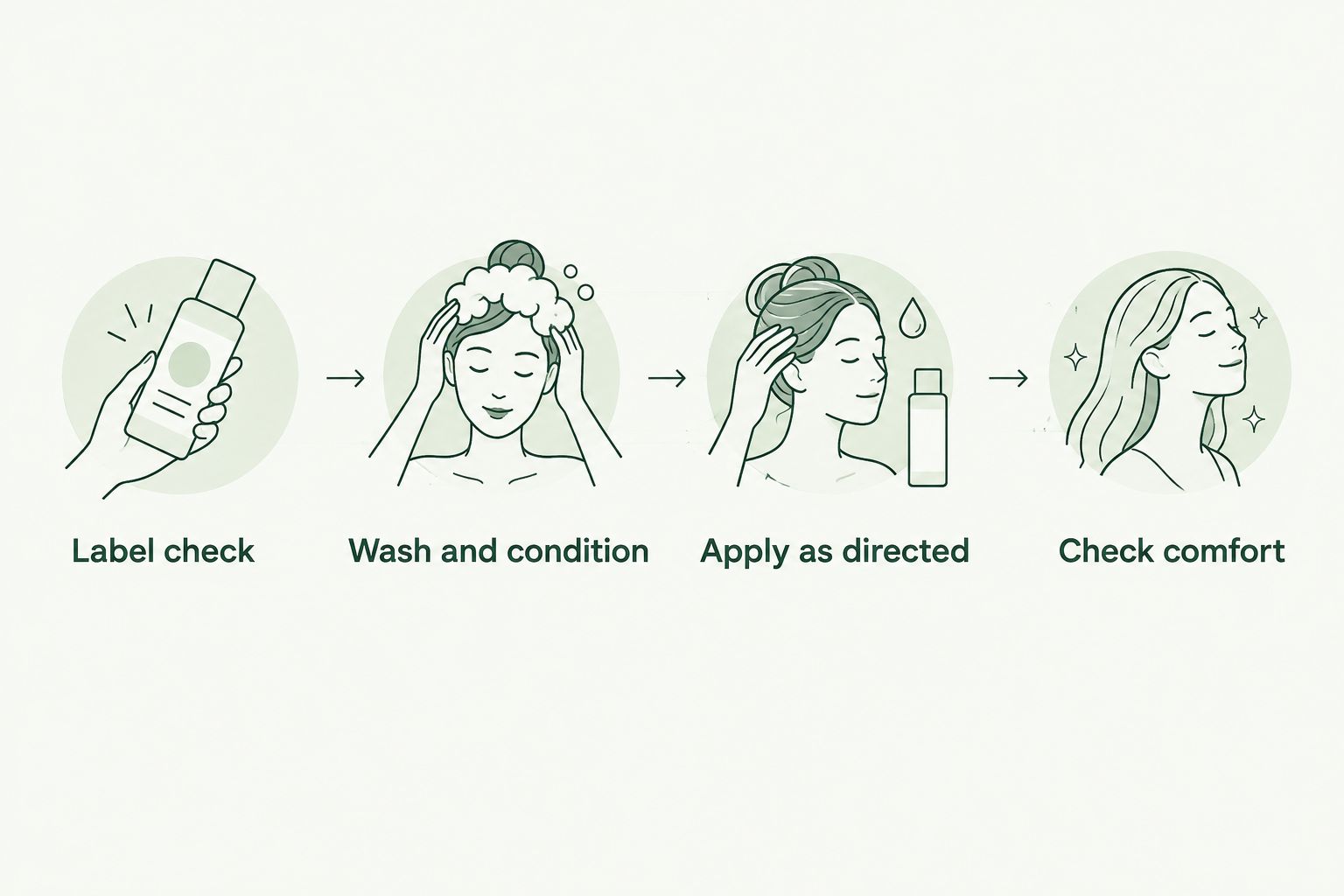
Use this simple order for your 2026 routine: Label check, Wash and condition, Apply as directed, then Check comfort. The label can change the precise application point; it always takes priority over a general routine.
Spray application and drying
- Apply only to the area named in the directions. Do not extend a lengths-only instruction to the scalp.
- Use the label's amount and method. Avoid adding extra applications simply because the product feels light or dries quickly.
- Complete any required rinse. If the product is a leave-in, continue with your usual styling routine without treating it as heat protection.
- Let your hair dry using your normal method. Notice the feel after drying, not only while the hair is wet.
Expected result: You have added a defined step rather than an extra layer without a purpose. Your scalp should remain comfortable; burning or persistent itching is a reason to stop, not a sign that the product is working.
Keep your first use ordinary. A day without an unfamiliar styling treatment gives you fewer changes to untangle if the result disappoints.
Routine notes
- Write down 3 observations: Scalp comfort, Hair feel, and Next wash.
- Record whether the spray went on the scalp or lengths, and whether you followed the labelled amount. Keep this factual.
- Review those notes after 2 wash days before changing the routine again, unless irritation means you need to stop sooner.
Those 2 wash days are a suggested review point for your 2026 routine, not a test of hair growth or a clinical measure. They simply give you a repeatable place to pause.
Expected result: You can describe what happened without relying on a vague impression. Useful notes include hair feeling easier to manage, heavier than usual, unchanged, or uncomfortable at the scalp.
Between-wash variant
A between-wash step is optional. Use it only if the current directions allow application in that setting. Do not turn a wash-day product into a daily treatment by habit.
| Workflow | Best for | Useful feature | Limitation |
|---|---|---|---|
| Wash-day use | Introducing the spray within a familiar routine | Gives you a consistent point for application | Still depends on the label's wet, damp, or dry-hair directions |
| Between-wash use | A permitted refresh between washes | Avoids rebuilding the whole routine | Adds another application and can make unwanted residue harder to trace |
Between-wash application
- Check that the label permits the intended use on your current hair condition.
- Decide what you want to change. If your hair feels comfortable and manageable, leave it alone.
- Apply as directed, without stacking another unfamiliar treatment into the same session.
- Reassess after drying. Stop adding product if your hair feels coated or your scalp becomes uncomfortable.
Expected result: Between-wash use has a clear purpose. It does not become an automatic daily task.
For a simpler 2026 schedule, keep wash-day use as your starting point. Expand only after you understand the directions and your response to the product.
Troubleshooting
Your hair feels stiff or coated
Stop adding more spray. Check whether you exceeded the directions, missed a required rinse, or combined several leave-in products. Wash according to your usual cleanser's instructions when needed.
Return to your familiar routine before trying again. If the same unwanted feel returns with directed use, leave the spray out rather than forcing it to fit.
Your scalp burns or itches
Stop using the product and rinse it off. Do not interpret discomfort as a necessary adjustment period or evidence of an active ingredient working.
Seek medical advice for persistent or worsening symptoms. Get urgent help for a severe allergic reaction, including breathing difficulty or facial swelling.
You cannot tell whether it does anything
Use your routine notes to separate cosmetic preferences from growth expectations. You can judge manageability and residue without claiming that a spray changes hair growth.
If you notice no useful difference, you do not need to increase use beyond the label. A product does not earn a permanent place merely because you bought it.
The directions leave a question unanswered
Pause before applying it in a new way. Use Sagestry's contact page to ask a precise question about scalp use, rinsing, application condition, or frequency.
Quote the wording on your bottle when asking. A specific question is more useful than asking whether the product is generally suitable for a routine.
Customize your workflow
Keep the routine as small as your hair needs. Choose an application point you can repeat, then change one thing at a time if the label allows it. There is no requirement to build a separate morning and evening ritual.
If your 2026 wash schedule follows swimming, separate the two decisions. Hair cleansing follows your hair-care directions; sun protection follows its own label. A rosemary hair spray is not a sunscreen.
A useful stopping rule is simple: Keep a step because it serves your routine, not because it adds another ingredient. You can leave the spray out on days when you do not need it.
FAQ
What's the simplest rosemary and rice water for hair routine?
Keep your usual wash routine and add the spray at the point specified on its label. Change one product at a time, then note scalp comfort and hair feel before adding another step.
Should I use rosemary and rice water spray before or after washing?
Use the timing stated on your product's label. The words rosemary, rice water, and spray do not establish whether a formula is a pre-wash treatment, rinse-out product, or leave-in.
Can I use rosemary and rice water spray every day?
Use it daily only if the product's directions permit that frequency. Daily use is not a requirement for building a useful routine, and discomfort is a reason to stop.
Does Sagestry rosemary hair spray contain tallow?
Do not assume the hair spray contains tallow. Its supplied description names fermented rice water, rosemary, and keratin; check the complete current ingredient list for the full formula.
Will rosemary and rice water spray grow my hair?
The supplied product information does not establish hair-growth results for this spray. Ingredient names alone do not demonstrate that a finished formula treats thinning or hair loss.
Can rosemary hair spray replace conditioner?
Do not replace conditioner unless the spray's directions specifically support that use. Keep your familiar conditioning step while you assess how the added product feels.
What should I do if rice water spray makes my hair feel stiff?
Stop adding more product and check the application and rinse directions. Return to your familiar wash routine, and leave the spray out if the unwanted feel returns with directed use.
One last thing
Your dried hair gives you information that wet hair cannot. Check how the lengths feel and how easily you manage them after your usual drying method, rather than deciding at the moment of application.
Leave one plain sentence in your notes: keep the step, change it within the directions, or leave it out. That is enough to make the next wash day simpler.


