

Best baby-specific choice: Baby Sunscreen Sensitive Skin Protection SPF 50, labeled for babies 6 months and older. Best family-lotion option: Non-Nano Zinc Oxide Tallow Mineral Sunscreen SPF 50. Best portable format: Non-Nano Zinc SPF 50 Mineral Sun Stick, subject to its age directions. This 2026 guide compares the formulas by intended user, ingredient role, and application format—not by promises about tallow.
- Sagestry Baby Sunscreen Sensitive Skin Protection SPF 50 is the baby-specific pick for children 6 months and older.
- The best tallow sunscreen for babies needs age-appropriate directions and labeled sun protection, not just a traditional base.
- Grass-fed tallow softens skin; zinc oxide provides mineral sun protection in formulas that list it as the active ingredient.
- Choose lotion for spreading coverage; choose a stick only when its age directions fit your child.
Why this matters
Tallow tells you something about a sunscreen's base. It does not tell you the product's sun protection, water-resistance duration, or suitability for a baby. Those details belong on the label.
Sagestry Baby Sunscreen Sensitive Skin Protection SPF 50 is the clearest choice here for parents seeking a baby-labeled mineral sunscreen. Its stated age range gives parents a more useful starting point than a general family product.
For babies younger than 6 months, prioritize shade and protective clothing. American Academy of Dermatology guidance recommends asking a pediatrician before using sunscreen on this age group. A product described as natural does not change that decision.
What makes the best tallow sunscreen for babies?
These are the buying criteria for this 2026 comparison. Read them before choosing a format.
- Age directions. A baby-specific label matters more than a general claim about sensitive skin. Check the minimum age and any warnings.
- Labeled protection. Look for broad-spectrum protection and SPF 30 or higher, consistent with American Academy of Dermatology recommendations. Tallow is not a substitute.
- Ingredient roles. Identify the sunscreen active separately from the moisturizing base. Grass-fed tallow and zinc oxide do different jobs.
- Application format. Choose a texture you can spread thoroughly. A portable stick still needs careful coverage.
- Water directions. Check whether the label states water resistance and for how long. Never assume that one product's directions apply to another.
- Your child's skin. Read the complete ingredient list for known sensitivities. A short list or familiar ingredient does not guarantee tolerance.
Tallow sunscreens at a glance
The order below favors an explicit baby age range first, then separates the other options by format. It is not a ranking of measured protection or skin tolerance.
| Product | Best for | Standout detail | Key limitation |
|---|---|---|---|
| Baby Sunscreen Sensitive Skin Protection SPF 50 | A baby-specific starting point | Mineral-only SPF 50; labeled for babies 6 months and older | Not the starting choice for younger infants without pediatric guidance |
| Non-Nano Zinc Oxide Tallow Mineral Sunscreen SPF 50, Water Resistant, 3.4 fl oz | Parents comparing a family lotion | Grass-fed tallow base with mineral SPF 50 | Confirm baby age directions before choosing it for an infant |
| Non-Nano Zinc SPF 50 Mineral Sun Stick | Portable, targeted application | Grass-fed tallow and zinc-only SPF 50 in a stick | Requires careful coverage and an age-label check |
1. Baby Sunscreen Sensitive Skin Protection SPF 50: best baby-specific pick
Baby Sunscreen Sensitive Skin Protection SPF 50 is a mineral-only sunscreen labeled for babies 6 months and older. That explicit age statement is its strongest reason for leading this list. You do not have to infer the intended user from packaging language about families.
Start with the age directions. Then read the full active and inactive ingredient panels, including the formula's base, before buying on the strength of the word tallow alone.
Baby Sunscreen Sensitive Skin Protection SPF 50 pros:
- Explicitly intended for babies 6 months and older.
- Carries a stated SPF 50.
- Uses a mineral-only sunscreen formula.
Baby Sunscreen Sensitive Skin Protection SPF 50 cons:
- Its stated age range does not include younger infants.
- Sensitive-skin positioning does not rule out individual ingredient reactions.
- The baby label does not replace checking water-resistance and reapplication directions.
Best for: Parents who want a baby-specific mineral sunscreen rather than adapting a general family product.
The useful distinction is plain. This product names the age group it serves. For a baby in that age range, that is a better first filter than a claim about tradition or ingredient simplicity.
Verdict: Buy for the stated age group after checking the complete label and your child's known sensitivities.
2. Non-Nano Zinc Oxide Tallow Mineral Sunscreen SPF 50: best family lotion
Non-Nano Zinc Oxide Tallow Mineral Sunscreen SPF 50 uses grass-fed tallow as its base and identifies zinc oxide as its mineral sunscreen ingredient. It is also described as water resistant. The lotion format is the alternative to consider when you prefer spreading sunscreen by hand.
This is the Sagestry tallow sunscreen option with an explicit grass-fed base in its product description. That explains the formula's starting material; the SPF label explains its stated sun protection.
Non-Nano Zinc Oxide Tallow Mineral Sunscreen SPF 50 pros:
- Identifies grass-fed tallow as the base.
- Identifies non-nano zinc oxide in the product name.
- States SPF 50 and water resistance.
Non-Nano Zinc Oxide Tallow Mineral Sunscreen SPF 50 cons:
- A general sunscreen description is not an infant age instruction.
- Water resistance is not waterproofing; the label's duration still matters.
- A moisturizing base does not establish how the finish will feel on your child's skin.
Best for: Parents comparing a grass-fed tallow lotion for family use who will check its age directions before infant use.
For your 2026 shortlist, keep protection and texture separate. First confirm the product is appropriate for your child. Then decide whether its application format fits your routine.
Verdict: Hold for infant use until you confirm the age directions; consider it when comparing family lotions.
3. Non-Nano Zinc SPF 50 Mineral Sun Stick: best portable format
Non-Nano Zinc SPF 50 Mineral Sun Stick combines a grass-fed tallow base with zinc-only mineral sun protection. Its product description identifies a pocket-size stick format. The distinction is portability, not stronger protection than the lotions above.
A stick changes how you apply sunscreen. It does not remove the need to cover every exposed area or follow the directions for your child's age.
Non-Nano Zinc SPF 50 Mineral Sun Stick pros:
- Identifies grass-fed tallow in the formula.
- States zinc-only mineral protection and SPF 50.
- Offers a portable alternative to lotion.
Non-Nano Zinc SPF 50 Mineral Sun Stick cons:
- A general sun-stick description does not establish suitability for babies.
- A quick pass is not a substitute for following application directions.
- Targeted application requires attention to edges and missed patches.
Best for: Caregivers who prefer a portable format and have confirmed that the age directions fit their child.
Treat the stick as a format choice. Do not assume a small package means a baby-specific formula, and do not assume the same application instructions as a lotion.
Verdict: Hold until you check the age label; choose it for portability rather than as an automatic baby recommendation.
What the ingredients actually do
A tallow sunscreen has more than one job to do. Its base affects how the formula feels. Its sunscreen active provides the labeled protection when the finished product is used as directed.
Grass-fed tallow: the base
Tallow is rendered animal fat. In skincare, it acts as an emollient: an ingredient that softens skin. Grass-fed describes its source, not a sunscreen protection rating.
Sagestry tallow sunscreen descriptions identify grass-fed tallow as a distinguishing base. That is a useful ingredient detail for shoppers who prefer animal-derived skincare. It also means those formulas are not vegan.
Zinc oxide: the sunscreen active
Zinc oxide is a mineral sunscreen ingredient. In a finished sunscreen, the labeled SPF and broad-spectrum statement matter more than the ingredient's name alone.
Do not treat non-nano as a replacement for reading the Drug Facts panel. Particle wording does not tell you the product's age directions, water-resistance duration, or application instructions.
Other ingredients: read their individual roles
The rest of a formula can help it spread, remain mixed, or feel comfortable on skin. Read the full list rather than assuming every tallow sunscreen contains the same supporting ingredients.
Fragrance-free status, allergens, and additional plant ingredients need their own label check. A familiar base does not make every finished formula interchangeable.
How to choose and use a baby sunscreen in 2026
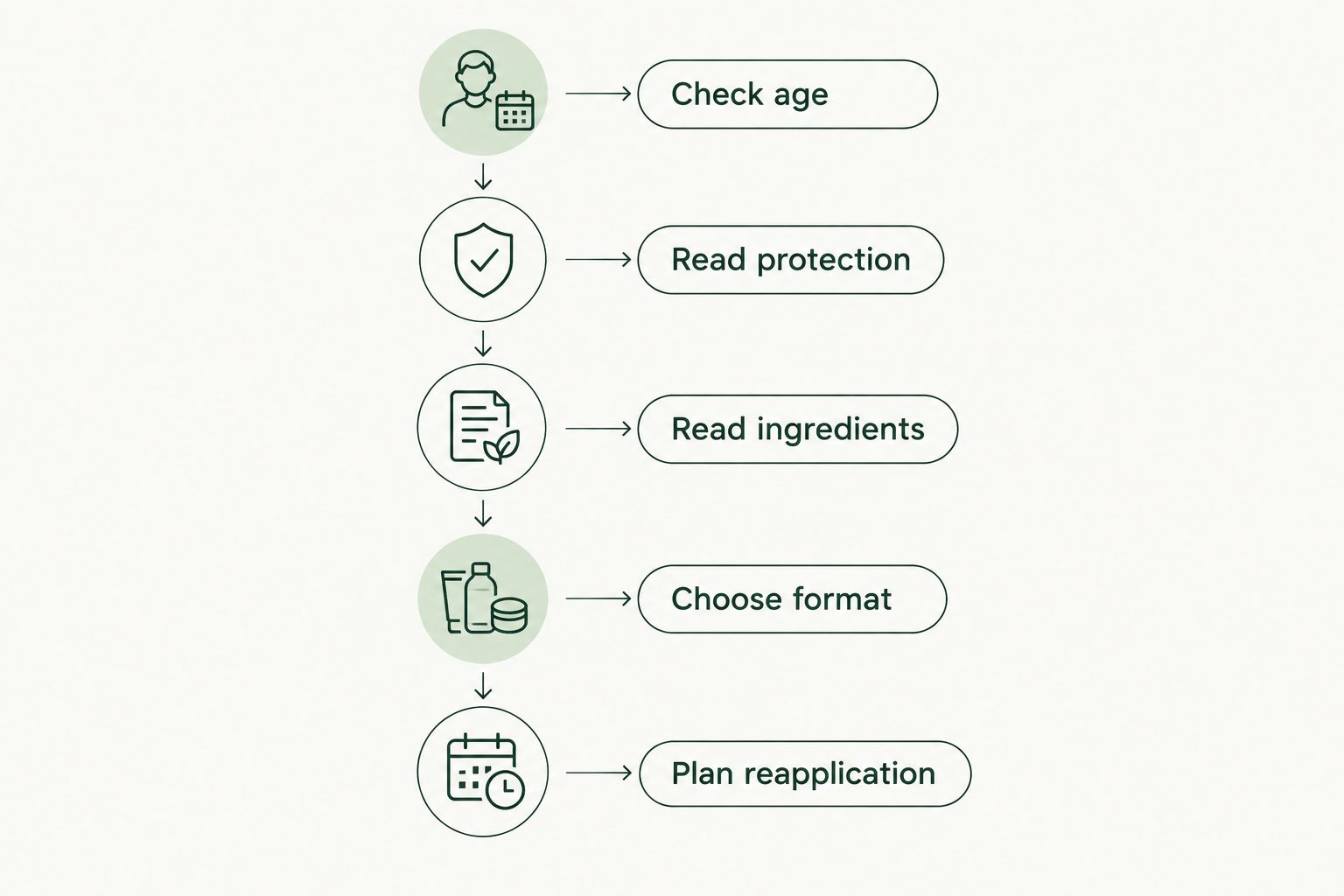
Use this sequence before the first outing. It keeps the buying decision tied to your baby rather than to an ingredient trend.
- Check age. Start with the stated minimum age. For babies younger than 6 months, ask a pediatrician about sunscreen use.
- Read protection. Check SPF and broad-spectrum labeling. Do not infer protection from tallow, zinc wording, or package size.
- Read ingredients. Check both active and inactive ingredients against known sensitivities.
- Choose format. Pick lotion or stick according to the label and the coverage you need to apply.
- Plan reapplication. Follow the product's directions, including its water-resistance limits.
Apply sunscreen as directed before sun exposure. American Academy of Dermatology guidance calls for reapplication every 2 hours outdoors and after swimming or sweating, following the label. A water-resistant claim does not remove that responsibility.
Keep shade and protective clothing in the routine. Sunscreen covers exposed skin; it is not a reason to leave a baby in direct sun longer.
Compare the formats before you choose
These three products represent the baby-specific, lotion, and stick options discussed above. Check each complete label rather than transferring directions between them.


How these choices are ranked
This 2026 ranking gives priority to explicit baby age directions, then distinguishes lotion from stick. It uses the stated product details, not comparative wear tests or claims that one base protects better than another.
The baby-specific option leads because its intended age group is clear. The other two choices serve separate needs and require an age-label check before infant use.
Which tallow sunscreen should you choose?
Start with Baby Sunscreen Sensitive Skin Protection SPF 50 for a baby aged 6 months or older. Confirm the complete ingredient list and protection directions before use.
Choose the family lotion or sun stick only after confirming suitability for your child. Grass-fed tallow is a preference about the base. Age-appropriate labeling is the first buying decision.
FAQ
What's the best tallow sunscreen for babies in 2026?
Start with an age-labeled baby sunscreen rather than choosing on tallow alone. Sagestry Baby Sunscreen Sensitive Skin Protection SPF 50 is the baby-specific pick in this comparison, with stated use for babies 6 months and older; check its full ingredient panel before buying.
Can I use tallow sunscreen on a newborn?
Ask your pediatrician before using sunscreen on a newborn. For babies younger than 6 months, prioritize shade and protective clothing rather than treating a tallow base as permission for use.
Does plain tallow work as sunscreen?
Plain tallow is not a substitute for a labeled sunscreen. Tallow serves as an emollient base; choose a finished sunscreen with appropriate SPF and broad-spectrum labeling.
Is a sunscreen stick better than lotion for babies?
Neither format is automatically better for babies. Choose according to the child's age, the product directions, and your ability to cover exposed skin thoroughly.
Does water-resistant sunscreen need reapplying?
Yes, water-resistant sunscreen still needs reapplication. Follow its labeled duration and directions, including after swimming or sweating; water resistant does not mean waterproof.
Does grass-fed tallow mean a sunscreen cannot irritate skin?
No, a grass-fed tallow base does not guarantee that a finished sunscreen will suit every baby. Read all ingredients and stop use if irritation occurs.
Can diaper balm with zinc oxide replace baby sunscreen?
No, zinc oxide in a diaper balm does not make that balm a sunscreen. Use a product specifically labeled for sun protection and follow its age and application directions.
One last thing
The same ingredient can serve different purposes. Zinc oxide in a diaper balm does not establish sunscreen protection, just as tallow in a moisturizer does not establish SPF.
For your 2026 purchase, read the product's intended use before its ingredient story. Choose the baby label first. Choose the preferred base second.


