

The best natural deodorant for heavy sweating depends on whether you want less odor or less wetness. For a grass-fed tallow base, consider Sagestry Grass-Fed Tallow Magnesium & Zinc Deodorant; for fragrance avoidance, choose a fragrance-free formula; for an animal-free routine, choose a vegan formula. None of these deodorant choices replaces an antiperspirant for sweat reduction in 2026.
- The best natural deodorant for heavy sweating addresses odor; an antiperspirant addresses sweat production.
- Sagestry suits shoppers seeking a grass-fed tallow deodorant without aluminum or baking soda.
- Choose fragrance-free deodorant when avoiding fragrance matters more than a particular base.
- Choose vegan deodorant when animal-derived ingredients do not fit your routine.
Why this matters
Sweat and odor are different problems. Underarm odor develops when skin bacteria break down substances in sweat. Deodorants address odor. Antiperspirants reduce sweating.
That distinction matters more than the word natural. A deodorant can suit your skin and help with odor while leaving your shirt damp. Wetness alone does not prove that the deodorant has failed at its intended job.
For your 2026 routine, start with 2 separate jobs: odor control and sweat reduction. Decide which one you need before comparing ingredients. If you need both, do not expect an aluminum-free deodorant to do the work of an antiperspirant.
What makes a useful natural deodorant for heavy sweating
Use these criteria before choosing a formula. A familiar ingredient list is a starting point, not a performance guarantee.
- Clear purpose. Choose deodorant for odor. Choose an antiperspirant when reducing underarm wetness is the priority.
- A suitable base. Tallow and shea butter soften skin. They do not establish how well a finished formula controls odor.
- Skin tolerance. Check fragrance, essential oils, baking soda, and any ingredient that has bothered your skin before.
- Ingredient clarity. Read the full list. Magnesium and zinc appear in different compounds, so their names alone do not explain the whole formula.
- Dietary and ethical fit. Tallow comes from animals. A tallow deodorant does not fit a vegan routine.
- Practical application. Follow the product directions and judge the result during your ordinary day, not just immediately after washing.
Natural deodorant options at a glance
These are buying paths, not interchangeable products. The named tallow deodorant is a specific option. The fragrance-free and vegan entries are formula categories to use when comparing labels.
| Option | Best for | Standout feature | Key limitation |
|---|---|---|---|
| Sagestry Grass-Fed Tallow Magnesium & Zinc Deodorant | Shoppers who want a tallow base | Grass-fed tallow; aluminum-free and baking soda-free | Animal-derived base; not an antiperspirant |
| Fragrance-free, baking soda-free natural deodorant | Shoppers prioritizing fragrance avoidance | Excludes fragrance and baking soda when confirmed on the label | Fragrance-free does not guarantee irritation-free |
| Vegan natural deodorant | Shoppers avoiding animal-derived ingredients | Uses an animal-free formula when verified | Vegan does not mean fragrance-free, gentle, or sweat-reducing |
1. Grass-Fed Tallow Magnesium & Zinc Deodorant: for a tallow base
Sagestry Grass-Fed Tallow Magnesium & Zinc Deodorant is a natural deodorant built on grass-fed tallow and shea. It is aluminum-free and baking soda-free. It suits shoppers who want an animal-fat base rather than a plant-only formula.
It starts with tallow. Tallow acts as an emollient, helping soften the skin. Shea butter serves a similar skin-conditioning role. These ingredients describe the base; they do not make the product a treatment for excessive sweating.
The product name also identifies magnesium and zinc. Read the full ingredient list to identify their particular forms. Ingredient names are useful clues, but a finished deodorant must be judged as a whole.
Tallow deodorant pros:
- Grass-fed tallow is an explicit part of the formula.
- The formula excludes baking soda.
- The formula excludes aluminum.
- Shea contributes to the skin-conditioning base.
Tallow deodorant cons:
- Tallow does not fit a vegan routine.
- An aluminum-free deodorant does not provide antiperspirant sweat reduction.
- Baking soda-free does not rule out sensitivity to other ingredients.
Best for: You want a grass-fed tallow deodorant and specifically prefer to avoid baking soda.
Verdict: Buy for the tallow-based formula, not for dry-underarm expectations.
2. Fragrance-free natural deodorant: for fragrance avoidance
A fragrance-free, baking soda-free deodorant is a useful comparison category when scented products have bothered your underarms. Choose by the actual ingredient list, not by a gentle-sounding scent name.
Fragrance can cause allergic contact dermatitis in susceptible people. Baking soda can also irritate some skin. Removing both narrows the ingredients you are choosing to apply, but it does not guarantee that the remaining formula will suit you.
Look for a clear fragrance-free statement, then read the ingredients. Essential oils are not automatically suitable for fragrance-sensitive skin simply because they come from plants. Unscented and fragrance-free are not always equivalent descriptions.
Fragrance-free deodorant pros:
- Avoids added fragrance when the formula confirms that claim.
- Does not add a competing scent to your daily routine.
- A baking soda-free version also excludes that potential irritant.
Fragrance-free deodorant cons:
- Other ingredients can still cause irritation.
- The absence of scent does not establish odor-control performance.
- A fragrance-free deodorant still does not reduce sweating like an antiperspirant.
Best for: Your main buying requirement is avoiding fragrance rather than choosing tallow or a plant-based base.
Verdict: Buy when fragrance avoidance is the deciding factor; skip fragrance as a substitute for odor control.
3. Vegan natural deodorant: for an animal-free routine
A vegan natural deodorant is the appropriate buying path when you avoid animal-derived ingredients. Verify the complete formula rather than assuming a plant-focused product description tells the whole story.
Tallow does not belong in a vegan formula. Beeswax is another animal-derived ingredient to check for when comparing solid deodorants. Plant oils and waxes can form a deodorant base, but the complete formula determines how the product feels and applies.
Keep your requirements separate. Vegan describes an ingredient restriction. It does not establish whether a deodorant contains fragrance or baking soda, and it does not establish skin tolerance.
Vegan deodorant pros:
- Fits an animal-free ingredient preference when verified.
- Allows you to compare plant-based bases without considering tallow.
- Can be assessed separately for fragrance and baking soda.
Vegan deodorant cons:
- Does not fit a shopper specifically seeking grass-fed tallow.
- Vegan ingredients can still irritate skin.
- Vegan deodorant is not automatically an antiperspirant.
Best for: Avoiding animal-derived ingredients is a firm requirement in your skincare routine.
Verdict: Buy a verified vegan formula when animal-free ingredients come first.
Read the base and the odor ingredients separately
A deodorant formula has different parts with different jobs. The base helps carry the ingredients and determines part of the texture. Other ingredients address odor, fragrance, or the structure of the product.
For a tallow formula, distinguish skin conditioning from odor control and sweat reduction. Tallow and shea butter belong in the skin-conditioning discussion. Their presence does not turn the formula into an antiperspirant.
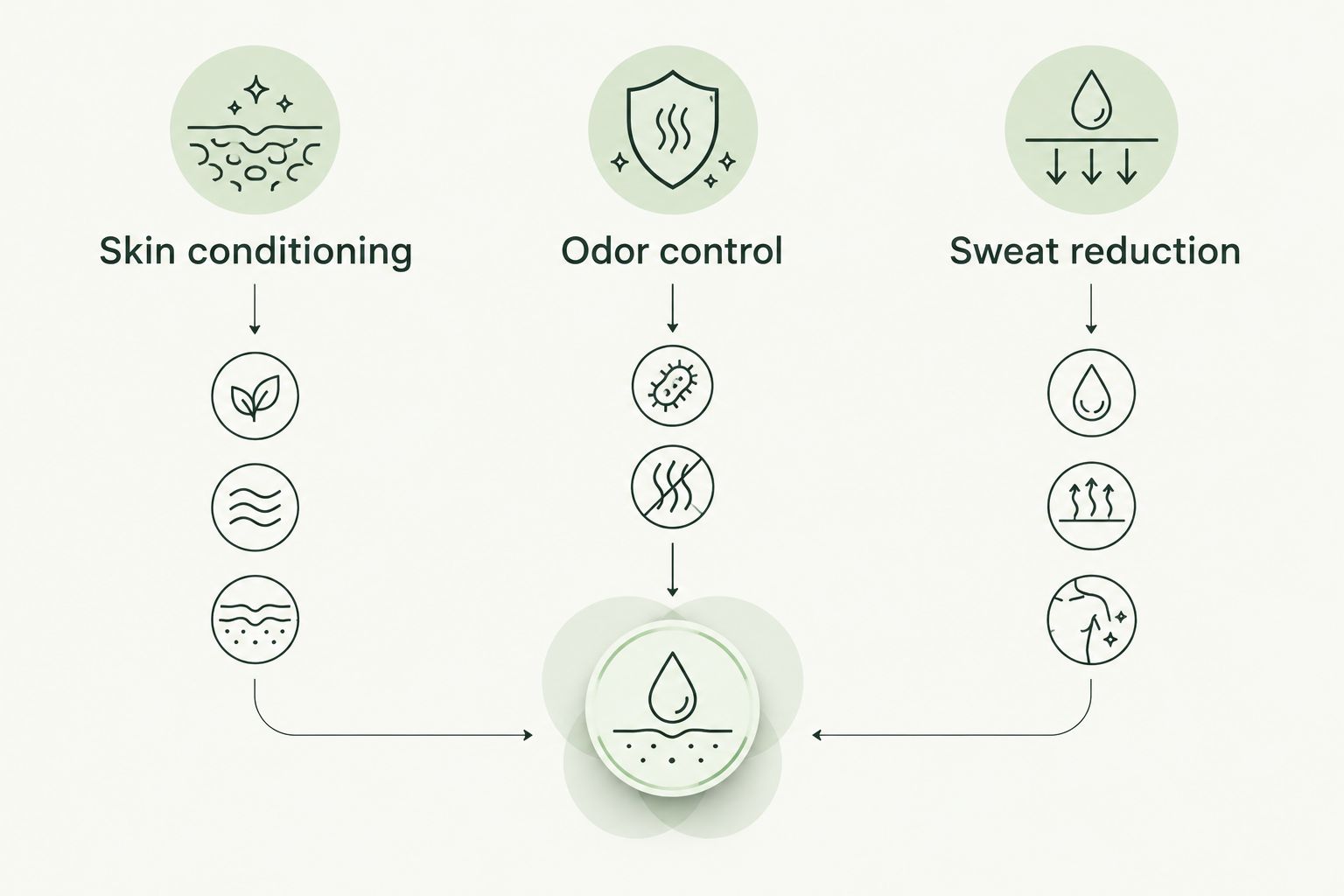
The same care applies to magnesium deodorant. Magnesium is not a complete ingredient description. Check the compound listed on the package and the rest of the formula before deciding that it matches a product you have used before.
For zinc, do not borrow claims from an unrelated product category. Zinc in a deodorant does not make the deodorant sunscreen. Each finished product has its own purpose and directions.
How to choose without buying the wrong thing
Use 3 label checks before buying: purpose, ingredients, and directions. This keeps the decision small. It also keeps attractive ingredient language from replacing the question you actually need answered.
Check the purpose
If your main complaint is odor, compare deodorants. If your main complaint is wet patches, compare antiperspirants or ask a clinician about excessive sweating. A deodorant is not a less powerful version of an antiperspirant; it serves a different function.
Check the ingredients
Choose your non-negotiable first. That might be a tallow base, no fragrance, no baking soda, or no animal-derived ingredients. Then check the whole formula for other ingredients you already know your skin dislikes.
Do not treat natural as a safety standard. Natural ingredients can irritate skin. A short list can still contain an ingredient that does not suit you.
Check the directions
Apply the product as directed. Begin with clean, dry underarms, and avoid applying to broken or irritated skin. If shaving leaves your skin sore, wait until it settles before introducing a new formula.
Change 1 product at a time. That makes it easier to identify what agrees with your skin. Stop using a product that causes burning, rash, or persistent itching rather than treating irritation as a necessary adjustment.
When heavy sweating needs a different answer
The right deodorant does not resolve every sweating problem. If sweating interferes with daily activities, speak with a healthcare professional about hyperhidrosis and treatment options.
An antiperspirant is the relevant product category for reducing sweat. Aluminum compounds used in antiperspirants reduce sweat flow. Avoiding aluminum is a personal formulation preference, but it also means giving up that antiperspirant function.
Seek medical advice for new or unexplained excessive sweating, especially when it occurs at night or with other symptoms. Do not keep changing deodorants when the main issue is persistent, disruptive wetness.
How these options are ranked
This 2026 guide ranks by fit: tallow preference, fragrance avoidance, and animal-free ingredients. It compares stated formulation details and the distinction between deodorants and antiperspirants. It does not assign an odor-control score or rank products by unverified wear time.
The named product comes first because its grass-fed tallow base and baking soda-free formula match a specific buying need. The other entries give you different decision paths, not claims that one formula works better on every body.
Which natural deodorant should you choose?
Sagestry natural deodorant suits shoppers who want a grass-fed tallow base without aluminum or baking soda. Choose it for those formulation details, not because tallow promises less sweating.
Choose fragrance-free deodorant if avoiding fragrance is your main concern. Choose a verified vegan formula if animal-derived ingredients are outside your routine. If dry underarms are your priority in 2026, start with the antiperspirant category instead.
FAQ
What's the best natural deodorant for heavy sweating?
The best natural deodorant for heavy sweating is one that addresses odor and suits your skin, but deodorant does not replace an antiperspirant. Choose a tallow base, fragrance-free formula, or vegan formula according to your ingredient requirements.
Will a tallow deodorant stop me from sweating?
Tallow deodorant does not stop sweating simply because it contains tallow. Tallow conditions skin; sweat reduction is an antiperspirant function.
Is Sagestry deodorant aluminum-free and baking soda-free?
Sagestry Grass-Fed Tallow Magnesium & Zinc Deodorant is aluminum-free and baking soda-free. Its stated base includes grass-fed tallow and shea.
Is magnesium deodorant better for sensitive underarms?
Magnesium alone does not establish whether a deodorant will suit sensitive underarms. Check the magnesium compound, fragrance, baking soda, and the rest of the ingredient list.
Why do I still have wet underarms after natural deodorant?
Deodorant addresses odor rather than reducing sweat production. Damp underarms do not by themselves show that a deodorant has failed to control odor.
Should I keep using natural deodorant if it burns?
Stop using a deodorant that causes burning, rash, or persistent itching. Do not treat irritation as detoxification; seek medical advice if symptoms persist.
When should I ask a doctor about heavy sweating?
Ask a healthcare professional when sweating disrupts daily life or is new and unexplained. Night sweating or sweating with other symptoms also deserves medical attention.
One last thing
For your 2026 comparison, judge odor and wetness separately. A deodorant can address the first while leaving the second unchanged. Choose the job before choosing the ingredient.


