

Tallow sunscreen for runners is sunscreen made with a tallow base and UV filters, used to protect exposed skin during outdoor runs. Runners need more than a familiar ingredient: the formula must suit sweating, repeated application, and time outside.
- Choose tallow sunscreen for runners by broad-spectrum protection, SPF, and labeled water resistance—not the tallow alone.
- Sagestry tallow sunscreen suits shoppers seeking a grass-fed base and zinc oxide; runners must check water-resistance directions.
- Use lotion for initial coverage; a mineral sun stick offers a portable format but needs careful application.
- Reapply at least every two hours outdoors, and follow the label after sweating or towel drying.
Why sunscreen matters for runners
A running route keeps you outside while sweat, clothing, and towels complicate sunscreen use. Your forehead, ears, neck, and the backs of your hands also need attention. A formula that feels pleasant indoors still needs a practical place in your running routine.
For your 2026 routine, start with the American Academy of Dermatology's basic criteria: broad-spectrum protection, SPF 30 or higher, and water resistance. Tallow describes the base. It does not establish any of those protections.
Sweating and swimming raise related label questions. The guide to choosing tallow sunscreen for swimming addresses the same water-resistance distinction runners need to understand.
Choose the sunscreen by its protection label first, then decide whether you like the base. A familiar ingredient is not a substitute for clear directions.
How to choose and use tallow sunscreen for running
Read the protection label first
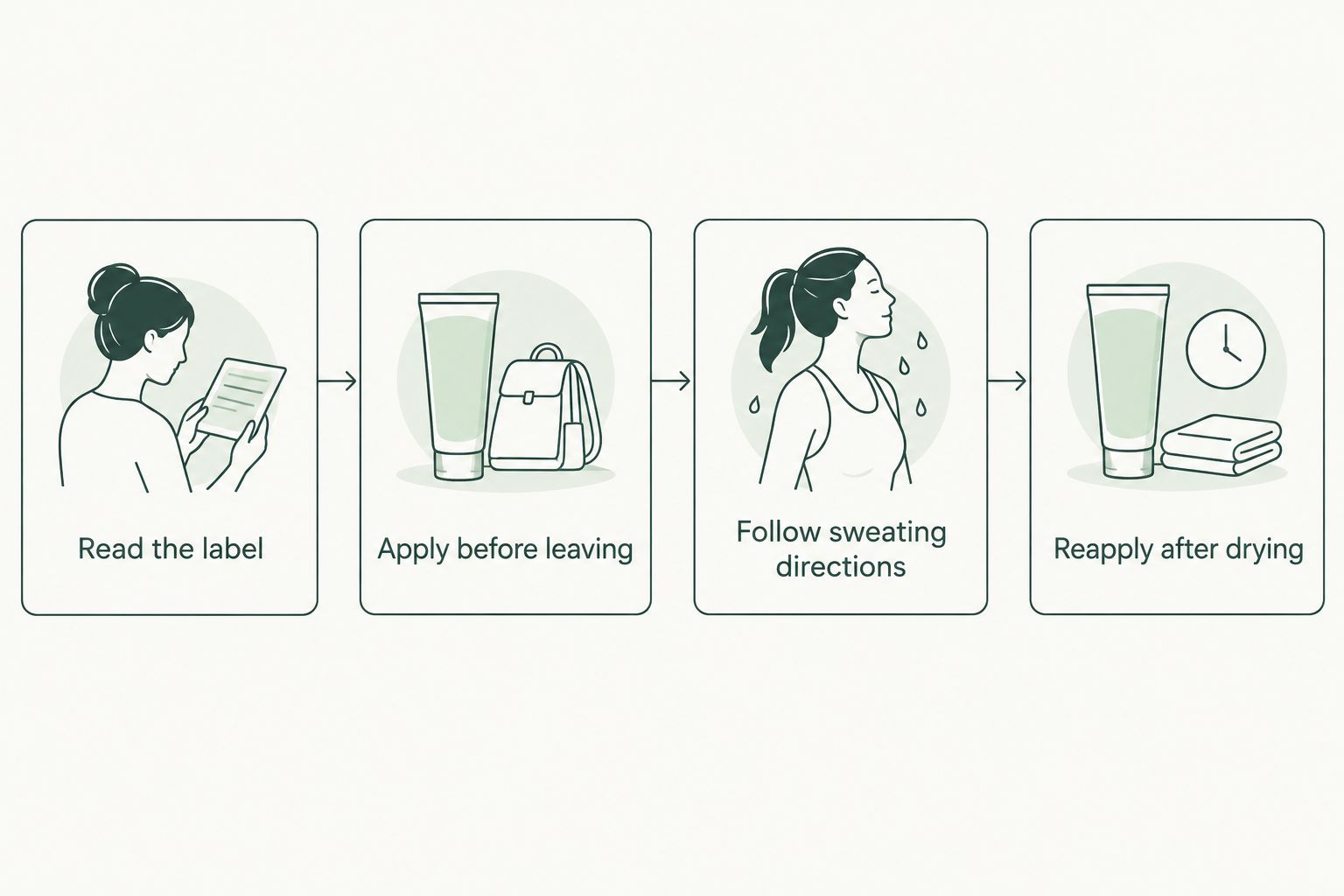
Start with the bottle you already own. Read its Drug Facts panel and directions before comparing ingredient stories. For running, the useful questions are whether the sunscreen protects against both UVA and UVB, what SPF it carries, and what its water-resistance statement says.
In the United States, water-resistant sunscreen labeling uses tested periods of 40 or 80 minutes. Neither means waterproof. Those periods also do not replace the directions for reapplication after towel drying.
Keep the exact wording in your comparison notes. A product name that says water resistant is not enough to establish its tested duration.
- Look for a broad-spectrum statement.
- Choose SPF 30 or higher, following dermatology guidance.
- Record the labeled water-resistance duration.
- Read the sweating and towel-drying directions.
- Check the expiration date and storage instructions.
Separate the base from the sun filter
Make a simple ingredient note before buying. Put ingredients that provide UV protection in one group and ingredients that form the base in another. This prevents a tallow story from overshadowing the sunscreen's actual job.
Grass-fed tallow is the formula's fatty base. It contributes to texture and the way the product spreads and feels. Zinc oxide is a mineral UV filter. Tallow itself does not establish a sunscreen's SPF.
Other ingredients need their own explanation. Waxes can give a stick structure. Emulsifiers help oil and water stay mixed in a lotion. Fragrance adds scent, not sun protection. Read the actual formula rather than assuming every tallow product contains the same ingredients.
- Identify the active sunscreen ingredient.
- Find tallow in the ingredient list.
- Check for fragrance or ingredients you avoid.
- Distinguish texture ingredients from UV filters.
- Reject homemade SPF claims based on ingredients alone.
Match the format to your route
Use your existing sunscreen to work out what your route requires. Can you apply it evenly before leaving? Can you carry it? Can you stop somewhere safe to reapply? A pocket-friendly format helps only if you use enough and cover every exposed area.
Sagestry tallow sunscreen is best for shoppers seeking a grass-fed tallow base with zinc oxide. The Non-Nano Zinc Oxide Tallow Mineral Sunscreen SPF 50 is a lotion labeled water resistant. Check its package for the tested duration and complete directions.
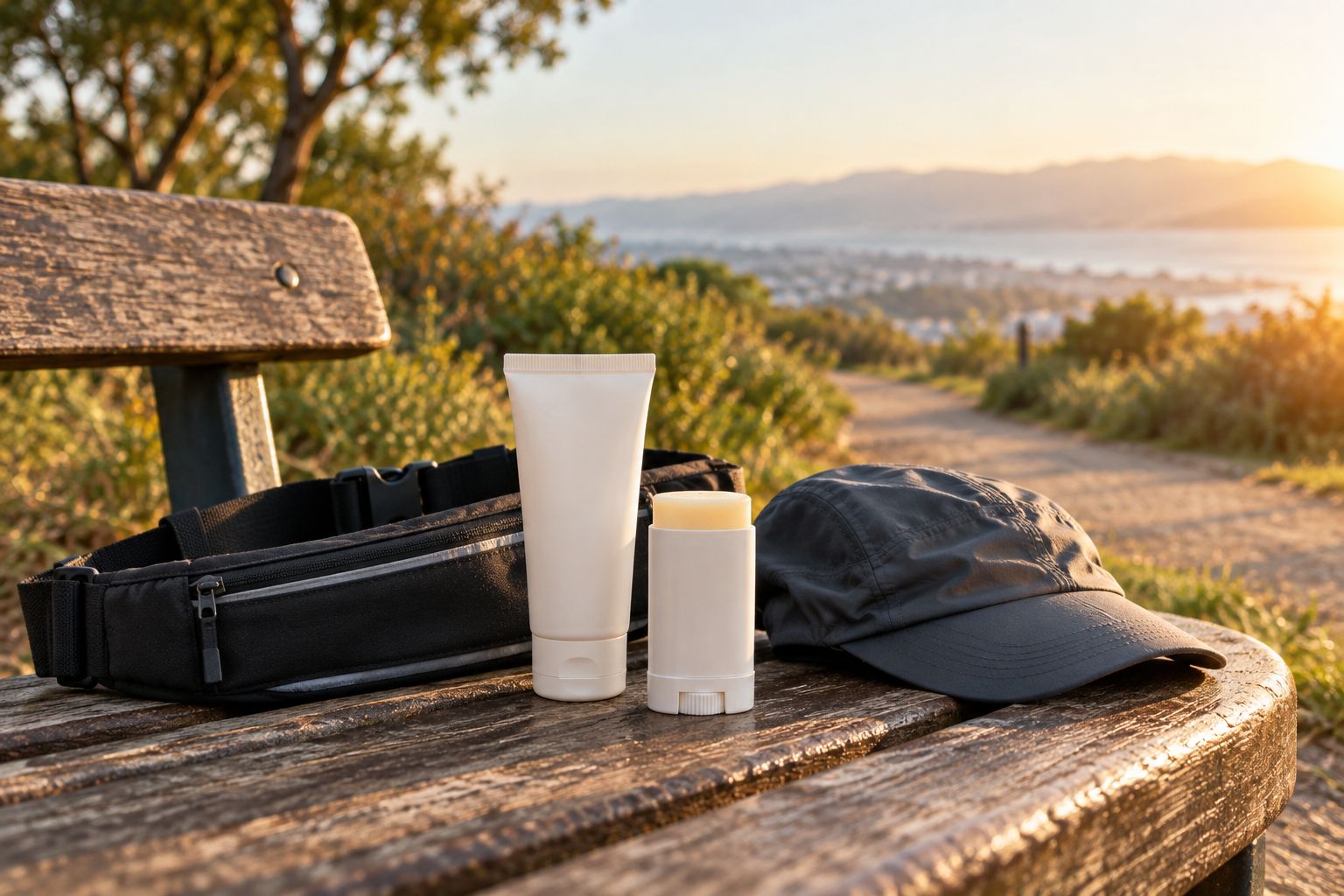
The SPF 50 Mineral Sun Stick offers a portable grass-fed tallow and zinc format. Its supplied product details do not establish a water-resistance duration. Do not transfer the lotion's claim to the stick.
- Choose lotion when spreading coverage is your priority.
- Choose a stick when carrying a compact format matters.
- Check each format's own protection label.
- Practice application before a demanding run.
- Carry the format you will actually stop to use.
Apply before leaving home
Give application its own place in your routine. Follow the label; standard sunscreen directions call for application 15 minutes before sun exposure. Do not wait until you are already sweating at the trailhead.
Work across exposed skin rather than only the areas that usually burn. Ears, the back of the neck, a visible scalp part, and exposed feet are easy to miss. Apply carefully around the eyes according to the label, without getting sunscreen into them.
For a stick, the American Academy of Dermatology advises four passes back and forth over each area, then rubbing it in. A quick stripe is not a complete application method.
- Apply to exposed skin before your run.
- Cover ears, neck, hands, and exposed scalp.
- Follow the label for application quantity.
- Use careful, overlapping stick coverage.
- Add clothing, a hat, and sunglasses where practical.
Plan reapplication around sweat
Set a reminder before leaving rather than relying on memory. Reapply sunscreen at least every two hours outdoors. Follow the product's water-resistance directions after sweating, and reapply after towel drying.
These instructions work together. An 80-minute water-resistance statement does not mean you can ignore towel drying. A short run also does not remove the need for proper initial application.
For a 2026 race plan, identify a safe place to stop and make the sunscreen accessible. Do not bury it beneath everything else in your bag. If you cannot carry it, arrange access along the route or reconsider the route's exposure.
- Set a reapplication reminder.
- Follow the labeled sweating interval.
- Reapply after towel drying.
- Carry sunscreen where you can reach it.
- Stop safely before applying it.
Test comfort before race day
Try a new formula during an ordinary training outing, not for the first time at an event. Assess how it spreads, how it feels beneath your usual clothing, and whether you can reapply it without rushing.
A small-area trial helps you notice irritation, but it does not prove allergy safety or measure UV protection. Stop using a product if it causes a reaction. Ask a clinician about persistent symptoms or a known ingredient allergy.
Keep comfort and protection separate in your notes. A rich texture does not prove better coverage. An invisible finish does not prove adequate application.
- Try the formula before an important run.
- Check comfort with your normal running kit.
- Practice reapplying with sweaty hands.
- Note irritation without diagnosing its cause.
- Keep the package directions available.
Compare sunscreen options for runners in 2026
The useful comparison is not simply tallow versus no tallow. It is the complete formula, its protection labeling, and the format you can use correctly. A non-tallow sunscreen with suitable labeling remains a valid running choice.
| Option | Best for | Useful feature | Key limitation |
|---|---|---|---|
| Sagestry tallow mineral sunscreen lotion | Shoppers seeking a grass-fed tallow lotion | Zinc oxide, SPF 50, and a water-resistant product label | Confirm the water-resistance duration and broad-spectrum statement on the package |
| Tallow mineral sun stick | Runners prioritizing a portable format | Grass-fed tallow and zinc in an SPF 50 stick | Careful repeated passes are necessary; supplied details do not establish water-resistance duration |
| Non-tallow water-resistant sunscreen | Runners who do not want an animal-derived base | Can meet the same broad-spectrum, SPF, and water-resistance criteria | Ingredients and comfort vary by formula; check the individual label |
A lotion and stick can serve different application preferences. Neither format removes the need to follow directions. Choose one dependable routine before adding more products.


Common mistakes runners make
Keep these errors out of your 2026 routine. Each confuses a convenient feature with evidence of protection.
- Treating grass-fed tallow as the sunscreen active. Tallow forms the base. Read the active ingredient and protection claims separately.
- Assuming every format shares the same water resistance. A lotion's claim does not establish a stick's tested performance, even within one brand.
- Counting a towel wipe as a harmless reset. Drying off changes your reapplication needs. Follow the label rather than waiting for your usual reminder.
- Saving the first application for the start line. Apply before sun exposure as directed. A crowded start is a poor place to check missed areas.
- Using comfort as a coverage test. A formula can feel pleasant while being unevenly applied. Follow the application directions, not the finish alone.
FAQ
What's the best tallow sunscreen for runners?
Choose a tallow sunscreen with broad-spectrum protection, SPF 30 or higher, and water resistance suited to its label directions. Sagestry offers a water-resistant SPF 50 tallow mineral lotion; check the package for the tested duration and full protection statements.
Does tallow provide sun protection on its own?
Tallow alone does not establish a tested SPF. In a tallow sunscreen, the labeled UV filters provide sun protection, while tallow forms part of the base.
Is tallow sunscreen sweatproof?
No sunscreen is sweatproof. In the United States, water-resistant labeling uses tested periods of 40 or 80 minutes, and users still need to follow reapplication directions.
How often should I reapply sunscreen during a run?
Reapply at least every two hours outdoors and follow the label's directions after sweating or towel drying. A water-resistance duration does not replace the instruction to reapply after drying off.
Is a sunscreen stick better than lotion for running?
A stick is easier to carry, but it is not automatically better for protection. Lotion supports spreading coverage, while sticks require careful repeated passes and rubbing in according to application guidance.
Will tallow sunscreen sting my eyes when I sweat?
A tallow base does not guarantee that sunscreen will not sting your eyes. Follow the eye-area warnings and try a new formula during ordinary training before using it at an event.
Can I use homemade tallow sunscreen for a long run?
Do not rely on homemade tallow sunscreen for a claimed SPF without appropriate finished-formula testing. Adding zinc oxide to tallow does not establish the resulting protection, evenness, or water resistance.
One last thing
Before your next 2026 run, photograph the sunscreen's directions and save them on your phone. Include the water-resistance statement, not just the front label. You will have the instructions when the bottle is packed away.
The quiet distinction matters: grass-fed tells you about the base, not how long protection lasts through sweat. Let the label guide the run.


