

For everyday use, start with Sagestry’s SPF 50 mineral lotion; choose the SPF 50 sun stick for a portable format, or the baby sunscreen for children aged 6 months and older. This 2026 ranking separates SPF, stated water resistance, and intended use so you can compare the formulas without treating tallow as the sun-protective ingredient.
- For tallow sunscreen ranked by SPF and water resistance, Sagestry’s mineral lotion is the default choice.
- All three sunscreen options list SPF 50; the lotion also explicitly states water resistance.
- Choose the sun stick for portability and the baby sunscreen for its stated age group.
- Grass-fed tallow forms the skincare base. Zinc oxide supplies mineral sun protection where identified.
- For swimming, confirm the water-resistance duration on the current package before choosing.
Why this matters
An SPF number answers one question. Water resistance answers another. A sunscreen’s base, format, and intended age group help you decide how it fits your day, but none replaces the protection directions on its label.
Sagestry’s mineral lotion is the default tallow sunscreen choice for shoppers who want SPF 50 with an explicit water-resistance claim. That does not establish a swimming duration. For water-specific buying decisions, use the guide to choosing tallow sunscreen for swimming alongside the product’s current Drug Facts label.
What makes a useful tallow sunscreen comparison
For this 2026 guide, these criteria matter more than the ingredient story alone:
- Labeled SPF: Compare the protection rating, not the richness of the base. The three options here all state SPF 50.
- Water-resistance wording: Look for an explicit claim and its duration. Do not infer either from tallow, zinc oxide, or a stick format.
- Intended user: A baby-specific formula has a different buying purpose from a general-use lotion.
- Application format: Choose a format you can spread evenly and reapply according to its directions.
- Ingredient roles: Separate the sunscreen active from the ingredients that give the formula its texture and skin feel.
- Practical limits: Portability, age labeling, and water-use instructions are separate considerations. No single feature answers every need.
Tallow sunscreens at a glance
These are use-case rankings, not a claim that one SPF 50 formula provides a higher SPF than another. The lotion takes the general-use slot because its product title states both SPF 50 and water resistance.
| Rank and sunscreen | Best for | Stated SPF | Water-resistance information | Standout feature | Key limitation |
|---|---|---|---|---|---|
| 1. Non-Nano Zinc Oxide Tallow Mineral Sunscreen SPF 50, Water Resistant, 3.4 fl oz | General-use lotion | SPF 50 | Explicitly described as water resistant; check the package for duration | Grass-fed tallow base with non-nano zinc oxide | The water-resistance claim alone does not establish a reapplication interval |
| 2. Non-Nano Zinc SPF 50 Mineral Sun Stick | Grass-Fed Tallow | Ancient Nourishment | Portable stick format | SPF 50 | Confirm on the current package before water use | Zinc-only mineral protection in a pocket-size stick | A convenient format does not confirm water resistance or adequate coverage |
| 3. Baby Sunscreen Sensitive Skin Protection SPF 50 | Babies aged 6 months and older | SPF 50 | Confirm on the current package before water use | Mineral-only formula with a stated baby age group | Its stated age group does not include babies younger than 6 months |
1. Mineral lotion: the default for general use
The mineral lotion combines a grass-fed tallow base with non-nano zinc oxide. Its title identifies SPF 50, water resistance, and a 3.4 fl oz container. Among these three options, it gives the clearest starting point for shoppers comparing both SPF and a stated water-resistance claim.
Grass-fed tallow is the formula’s base. It contributes the fatty, emollient part of the lotion rather than establishing its SPF. Zinc oxide is the mineral sunscreen ingredient; the finished sunscreen’s labeled protection is what matters when you use it outdoors.
Mineral lotion pros:
- States SPF 50 on the product title.
- Explicitly identifies water resistance.
- Names non-nano zinc oxide rather than leaving the mineral ingredient unclear.
- Identifies grass-fed tallow as the base.
Mineral lotion cons:
- The water-resistance wording does not, by itself, tell you the duration.
- The 3.4 fl oz size is a container measure, not a promise of how many applications it provides.
- A lotion still requires careful spreading and reapplication; its base does not remove those steps.
Best for: Shoppers who want a general-use tallow mineral lotion and an explicit water-resistance claim to verify against the package.
For a 2026 sunscreen purchase, start here if you prefer lotion. Read the current directions before planning a swim or a long outdoor day. Verdict: Buy for the general-use lotion role; confirm the labeled water-resistance duration before water use.
2. Mineral sun stick: the choice for portability
The mineral sun stick pairs grass-fed tallow with zinc-only mineral protection and SPF 50. Its description identifies a pocket-size format. Choose it because you want a stick, not because a solid formula proves stronger protection.
A stick changes how you apply sunscreen. You still need an even layer over exposed skin, following the package directions. A quick swipe is not evidence that you have applied the amount needed for the labeled protection.
Mineral sun stick pros:
- States SPF 50.
- Identifies zinc as the sunscreen mineral.
- Uses a grass-fed tallow base.
- Offers a pocket-size alternative to lotion.
Mineral sun stick cons:
- The product information here does not establish a water-resistance duration.
- A small, portable format does not make coverage automatic.
- Its stick format alone does not establish suitability for a particular age group.
Best for: Shoppers who prefer carrying and applying a solid sunscreen format.
Keep the decision narrow. The sun stick earns its place for portability, while water use requires a separate label check. Verdict: Buy for the portable format; wait on a swimming decision until you confirm its water-use directions.
3. Baby sunscreen: the choice for the stated age group
The baby sunscreen is described as a mineral-only SPF 50 formula for babies aged 6 months and older. That age statement is its clearest distinction in this comparison. It is not a higher-SPF alternative to the other two options.
Sagestry’s baby sunscreen belongs in a parent’s comparison because it names the intended user. Still, a baby-specific name does not replace reading the complete ingredient list, warnings, and directions. It also does not promise that every child will tolerate every ingredient.
Baby sunscreen pros:
- States SPF 50.
- Identifies a mineral-only formula.
- Gives a clear starting age of 6 months.
Baby sunscreen cons:
- The stated age group excludes younger infants.
- Water resistance and its duration need confirmation on the current package.
- Sensitive-skin positioning is not a guarantee against irritation.
Best for: Parents comparing mineral sunscreen labeled for babies aged 6 months and older.
For infants younger than 6 months, ask a healthcare professional about sun protection rather than extending this product’s age statement. Verdict: Buy for the stated baby age group after checking the full label; skip it as a label-based recommendation for younger infants.
What the ingredients actually do
It starts with tallow. That is the distinguishing base in these tallow sunscreen options, not a reason to set aside ordinary sunscreen instructions. A familiar ingredient and a protection claim do different jobs.
- Grass-fed tallow: The fatty base contributes emollience, texture, and skin feel. Grass-fed describes its sourcing; it is not an SPF rating.
- Zinc oxide: A mineral sunscreen active that protects against ultraviolet radiation. The lotion and sun stick explicitly identify it.
- The finished formula: The complete sunscreen determines how the ingredients work together in use. Its labeled SPF and directions remain the basis for choosing and applying it.
The baby sunscreen’s supplied description identifies a mineral-only formula but does not name its active ingredient. Read its Drug Facts panel rather than assuming its full ingredient list matches the adult lotion.
Choose tallow for the base you prefer. Choose sun protection by the finished product’s label. The same rule applies in 2026 whether the package emphasizes tradition, a short ingredient list, or a mineral active.
How to read SPF and water resistance
SPF primarily describes protection against UVB, the ultraviolet radiation associated with sunburn. Broad-spectrum labeling addresses UVA as well as UVB. Read both parts of the label instead of treating a high SPF number as the whole decision.
All three sunscreens in this comparison state SPF 50. They therefore tie on the stated SPF number. The ranking separates their uses rather than inventing a difference in protection between equal ratings.
Water resistance is separate. Under U.S. sunscreen labeling rules, a water-resistance claim specifies either 40 minutes or 80 minutes. Neither duration means waterproof, and neither allows you to ignore the label’s reapplication instructions.
Use this reading order:
- SPF: Confirm the stated protection rating.
- Broad spectrum: Check the label for UVA and UVB protection wording.
- Water resistance: Find the duration if you expect swimming or sweating.
- Directions: Follow application, reapplication, and towel-drying instructions.
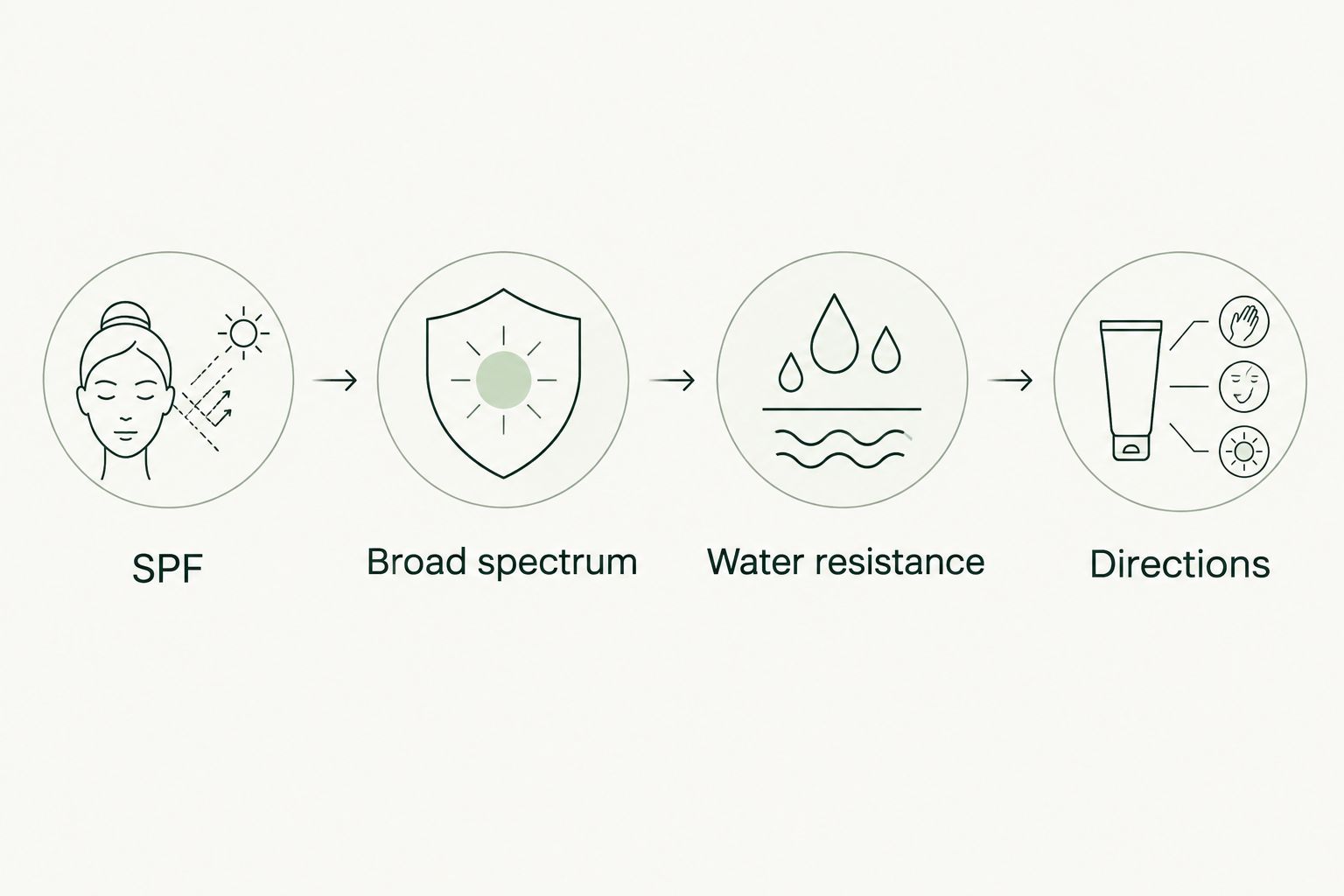
Do not convert SPF 50 into a personal allowance for time in the sun. Application amount, water exposure, rubbing, and reapplication all matter. Clothing, shade, and other sun-protection measures still belong in the plan.
Choose the format after checking the label
Before buying in 2026, write down the job your sunscreen needs to do. General use points toward the lotion. Portability points toward the stick. A baby aged 6 months or older points toward the baby-specific formula.
Then check the condition that matters most. For swimming, that is the labeled water-resistance duration and directions. For a child, it includes the age statement. For an ingredient-conscious shopper, it includes the complete list, not just the ingredients named on the front.
The product cards below keep those three use cases separate. None should be treated as an automatic substitute for another solely because each states SPF 50.


How the ranking works
This ranking uses stated SPF, explicit water-resistance wording, intended user, and format. It does not represent a head-to-head wear test or establish differences in irritation, white cast, or swimming performance.
The mineral lotion ranks first for the general-use slot. The stick and baby sunscreen follow as distinct choices, not weaker versions of the lotion. Sagestry’s tallow sunscreen range is more useful to compare by purpose than by an SPF leaderboard where every listed option ties.
Which tallow sunscreen should you choose?
Choose the mineral lotion if you are undecided. It combines SPF 50 with an explicit water-resistance claim and a general-use lotion format. Confirm the duration and directions on the package before relying on it around water.
Choose the sun stick when portability is your deciding factor. Choose the baby sunscreen for its stated age group. For your 2026 comparison, keep those decisions separate from claims about which base ingredient sounds most familiar.
FAQ
What is the default choice for tallow sunscreen ranked by SPF and water resistance?
Sagestry’s SPF 50 mineral lotion is the default choice because it explicitly states both SPF 50 and water resistance. Confirm the water-resistance duration on the current package before swimming.
Does tallow itself provide SPF 50 protection?
No. Tallow is the fatty base, not a substitute for a finished sunscreen’s labeled SPF. Choose sun protection by the sunscreen label rather than the presence of tallow.
Which sunscreen in this comparison has the highest SPF?
All three listed sunscreens state SPF 50. Their stated SPF ratings tie; the useful differences are format, intended age group, and water-resistance information.
Is the mineral sun stick water resistant?
Confirm water resistance on the mineral sun stick’s current package before using it for swimming. Its supplied product description establishes SPF 50 and zinc-only protection, not a water-resistance duration.
Can I use the baby sunscreen on a newborn?
The baby sunscreen’s stated age group begins at 6 months. For a younger infant, ask a healthcare professional about sun protection rather than treating the baby product name as permission.
Does water-resistant sunscreen mean waterproof?
No. Water-resistant sunscreen is not waterproof. U.S. water-resistance labels specify 40 or 80 minutes, and you still need to follow the product’s reapplication directions.
Is a tallow sun stick better than a tallow lotion?
Neither format is automatically better. Choose the stick for portability or the lotion for your preferred application method, then compare the protection claims and directions separately.
One last thing
A diaper balm can contain both tallow and zinc oxide without being a sunscreen. Shared ingredients do not transfer an SPF claim from one product to another. Use a product labeled as sunscreen for sun protection, and keep each formula in its intended role.


